If you’re looking for a complete Cannes travel guide that goes beyond red carpets and film festival photos, you’re in the right place.
Cannes has a glamorous reputation, but beneath the Croisette’s palace hotels lies a walkable city with sandy beaches, a historic hilltop quarter, a lively market district, and easy access to the Lérins Islands just offshore. There’s more to Cannes than the glitz suggests.
I’ve visited Cannes many times over the years, mostly on day trips with my family, but my most recent stay was a 10-day solo trip based in La Banane. That gave me the chance to explore the city at a slower pace, eat out nearly every evening, revisit beaches and neighborhoods, and see how different Cannes feels when you aren’t trying to squeeze everything into one afternoon.
This Cannes travel guide brings it all together: what is actually worth your time, how long you need, where to eat and stay, which beaches to choose, how to get here from Nice, and which nearby destinations make sense as day trips from Cannes.
So, are you ready to discover Cannes? Let’s go!
This Cannes travel guide features the best things to do, from La Croisette and Le Suquet to sandy beaches and the Lérins Islands, plus where to eat, where to stay, how to get here, and how to plan your time.
Affiliate links are sprinkled throughout the site content. Clicking on such a hyperlink and making a booking on the platform it refers to may result in a commission for Nice & Beyond at no additional cost to you. For more information, visit the Disclaimer page or read how I choose what to recommend.
Cannes at a Glance
Short on time? Here’s what matters most:
🎬 Best for
Sandy beaches, La Croisette, the Lérins Islands, shopping, dining, and a polished French Riviera atmosphere
🚫 Not ideal for
Travelers looking primarily for a large historic center or a city packed with museums (Nice and Antibes offer more in those areas)
🗓 Time needed
One day for the main sights; two days if you want to add an island, beach-club afternoon, or a slower evening
☀️ Best time to visit
Late spring and September for a good balance of weather and crowds; summer for swimming and beach life
🚆 Car needed
No, central Cannes is very walkable, and trains make it easy to explore the surrounding coast
Is Cannes worth visiting?
Yes, but not necessarily for the reasons you might expect.
If you enjoy seaside walks, sandy beaches, island escapes, shopping and good food, Cannes has plenty to offer beyond its red carpet. La Croisette is certainly worth seeing, but the city becomes more interesting once you turn away from the waterfront and explore Le Suquet, Marché Forville and the streets around Rue Meynadier.
Cannes is a good choice if you enjoy a mix of seaside walks, island escapes, shopping and good food. Its nightlife is also quite different from Nice’s: Cannes leans more towards upscale bars and clubs, while Nice offers a broader mix of cafés, bars and casual evening options.
Le Suquet doesn’t have quite the same historic atmosphere as the Old Towns of Antibes or Menton, but that isn’t really the point. Cannes has its own personality, and its combination of sandy beaches, the Lérins Islands, and polished seaside atmosphere makes it a worthwhile stop on a French Riviera trip.
How much time do you need in Cannes?
A half day is enough for a quick look at the essentials: Le Suquet, the Vieux Port and part of La Croisette.
With a full day, you can slow down, visit Marché Forville, have a proper lunch, walk more of the Croisette and fit in some beach time.
I’d allow two days if you want to combine the city with Île Sainte-Marguerite, spend time at a beach club, or simply avoid rushing from one sight to the next.
If you’re coming from Nice for one day, my Nice to Cannes day trip guide gives you a realistic itinerary, including a half-day option.
Best things to Do in Cannes
Cannes is compact enough that many of its main sights can be explored on foot. My guide to the best things to do in Cannes offers a more detailed look at the city’s attractions, including the city’s cultural spots, parks, viewpoints, and shopping.
These are the experiences I’d prioritize:
1. Walk La Croisette
The Boulevard de la Croisette runs for roughly 2 km along the Bay of Cannes, linking the Palais des Festivals with the eastern end of the city.
This is the Cannes you’ve probably seen in photographs: palm trees, sandy beaches, palace hotels, designer boutiques and private beach clubs. Walk it rather than simply ticking it off from a car or tour bus. The atmosphere changes as you move away from the Palais, becoming more relaxed toward Pointe Croisette.
2. Explore Le Suquet
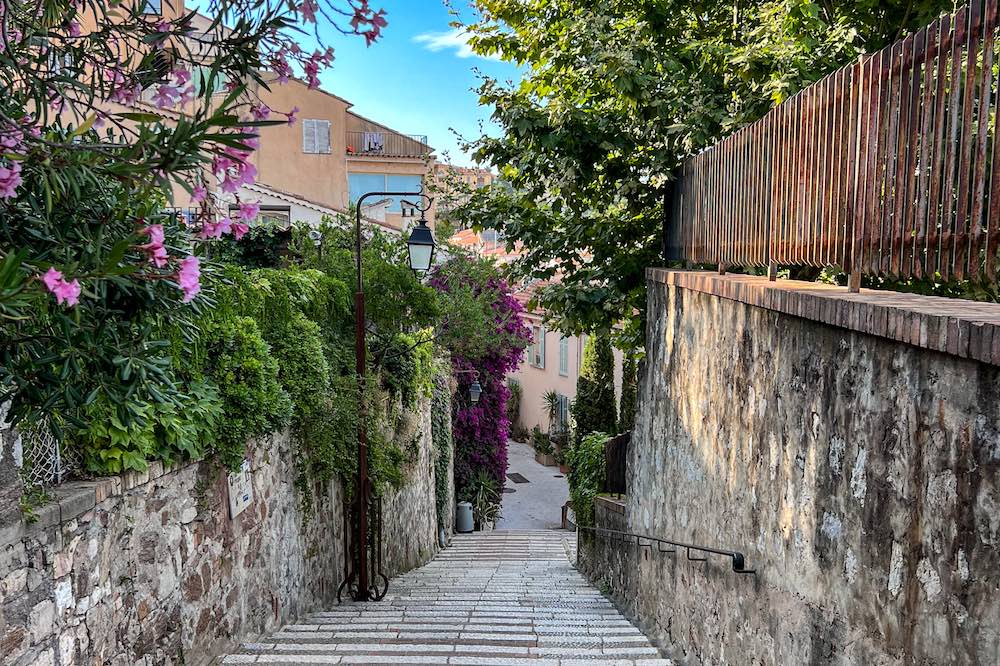
Le Suquet is Cannes’ historic quarter, climbing the hill above the Vieux Port.
The narrow lanes and staircases lead up toward the Église Notre-Dame d’Espérance and the Musée des Explorations du Monde, housed in the old Château de la Castre. From Place de la Castre, you can look across the Vieux Port, La Croisette and the Bay of Cannes.
I wouldn’t tell you that Le Suquet rivals the Old Towns of Antibes or Menton — it doesn’t — but the views alone make the climb worthwhile.
3. See the Vieux Port
At the foot of Le Suquet, the Vieux Port is an easy stop between the historic quarter and La Croisette.
Today, luxury yachts sit alongside the city’s maritime heritage, and the port is also where you’ll catch ferries to the Lérins Islands. It’s especially pleasant around sunset, when the light catches the boats and the hilltop buildings above the harbor.
4. Visit the Lérins Islands
The Îles de Lérins are one of Cannes’ biggest advantages.
Île Sainte-Marguerite is the larger island, with Fort Royal, shaded trails, coves, beaches and the underwater eco-museum. It’s the one I’d choose if you want walking, swimming or a proper change of scenery.
Île Saint-Honorat is quieter and has a completely different character, with its historic monastery and vineyards maintained by the Cistercian monks.
There is no combined ferry ticket, so treat them as separate excursions. If you want to understand Sainte-Marguerite in detail, see my complete Île Sainte-Marguerite travel guide. And if you’re ready to book your tickets, you can do so here.
5. Visit Marché Forville
Marché Forville is one of my favorite ways to see a less polished side of Cannes.
The covered market and surrounding streets are a useful contrast to the Croisette, with fresh produce, seafood, cheeses, flowers, and Provençal specialties. Rue Meynadier just behind it is worth exploring too, and the place to be if you’re looking for small food shops and local products.
It’s also a practical stop before a ferry to Sainte-Marguerite if you want to put together a picnic.
6. See the Film Festival landmarks
You don’t need to visit during the Cannes Film Festival to enjoy the city’s cinematic side.
The Palais des Festivals sits at the western end of La Croisette, with its famous red-carpeted steps and the Chemin des Étoiles, where film stars have left handprints.
During the festival itself, the atmosphere is obviously very different – and accommodation, restaurants, and parking become considerably harder to manage – but the Palais remains an easy stop on any Cannes itinerary.
7. Go shopping around Rue d’Antibes and the Carré d’Or
Shopping is a real part of the Cannes experience, even if you’re not in the market for designer handbags.
Rue d’Antibes is the main shopping street, while the Carré d’Or between Rue d’Antibes and La Croisette is where you’ll find more luxury boutiques and designer names. It’s an easy addition to a Croisette walk.
8. Discover Cannes’ quieter green spaces
For a break from the seafront, head to the gardens of the former Villa Rothschild, now home to the Médiathèque Noailles, or explore the small Mont Chevalier Square below Place de la Castre.
If you’d rather walk in a larger natural setting, the Croix-des-Gardes Natural Park west of the center has forested trails and views across the bay and toward the Lérins Islands.
9. Take a boat trip along the coast
You don’t have to spend a full day on an island to get out on the water.
Several boat trips leave from Cannes, ranging from relaxed sailing and catamaran outings to faster coastal cruises. Some head toward the Lérins Islands, while others follow the coast toward the red cliffs of the Estérel.
10. Visit Cannes’ White Lotus locations
The upcoming fourth season of The White Lotus was filmed partly in Cannes, with the Hôtel Martinez taking a starring role as the fictional White Lotus Cannes.
The hotel sits directly on La Croisette, so you don’t need a dedicated excursion to see the setting. A walk along the boulevard already takes you past the hotel, its beach club and several of the city’s other glamorous locations.
Best beaches in Cannes
Cannes’ sandy beaches are one of its biggest advantages over many other French Riviera destinations.
For more details on the different beaches, beach clubs, prices, booking conditions, and which stretches suit different types of visitors, read my guide to the best beaches in Cannes.
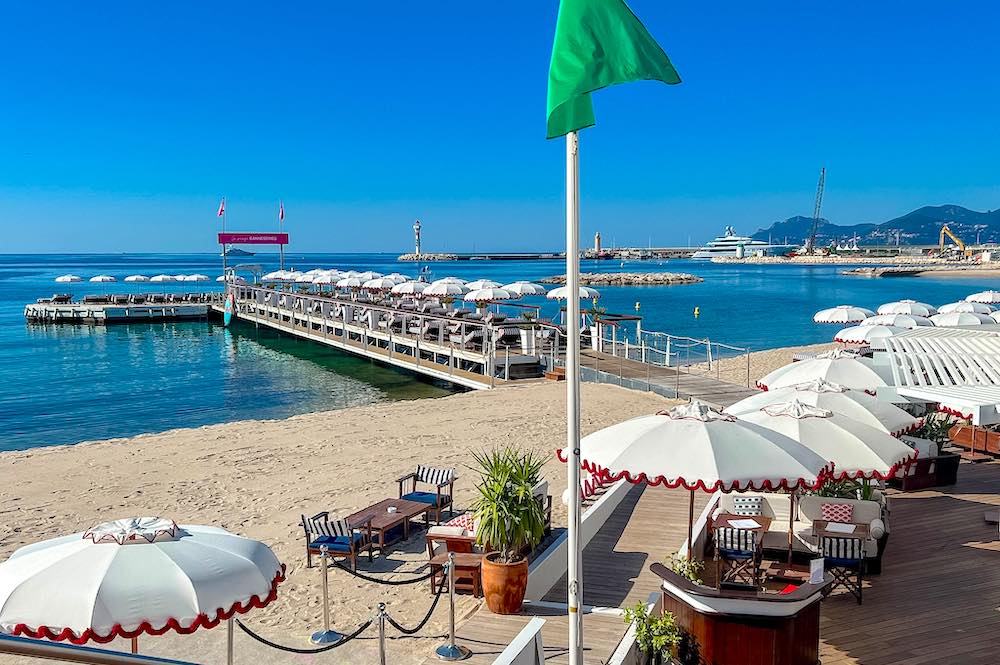
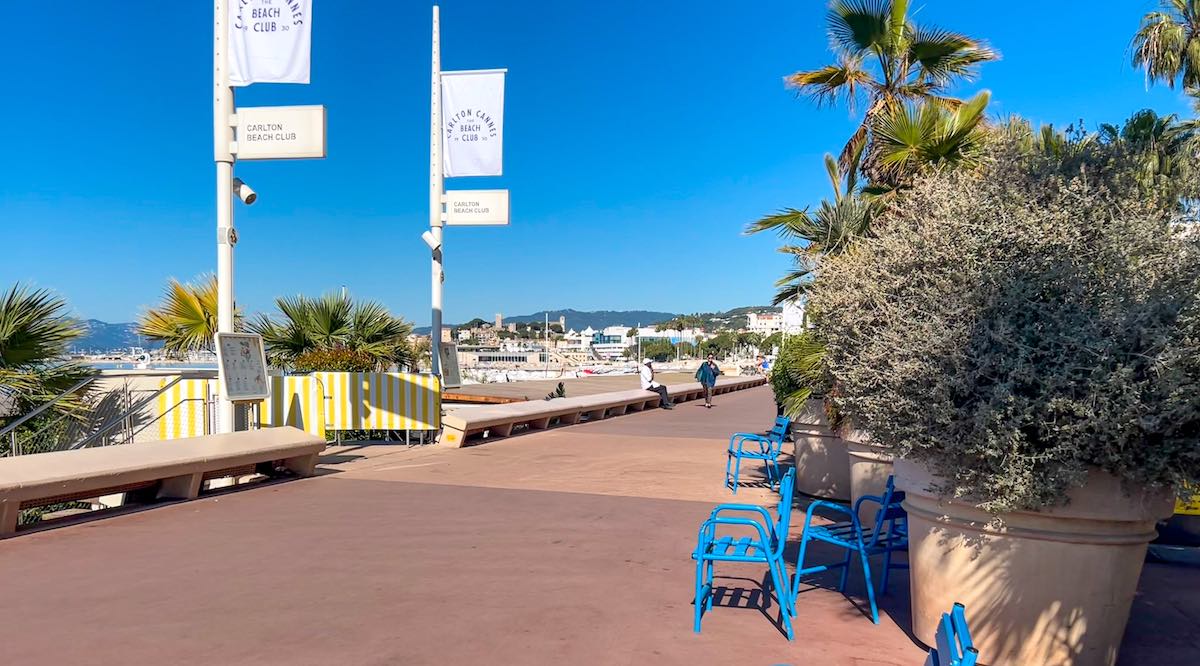
The Croisette is lined with private beach clubs, including La Plage du Martinez, Carlton Beach Club, La Môme Plage and Ciro’s. These are as much about the Cannes experience as the actual beach: loungers, restaurant service, people-watching and the see-and-be-seen atmosphere.
You don’t need to pay for that experience, though. Public options include Plage Brigitte Bardot, formerly known as Plage Macé, near the Palais des Festivals, as well as Zamenhof and Plage de la Roseraie further along the Croisette.
Out toward Pointe Croisette, Bijou Plage offers a more relaxed alternative, while Plage du Midi west of the Vieux Port gives you a quieter stretch away from the main Croisette crowds.
And then there are the beaches of Île Sainte-Marguerite. Plage Sainte-Anne is the easier family-friendly option, while Crique Pointe du Dragon is more rugged and scenic.
Where to Eat in Cannes
Cannes has a wider restaurant scene than its red-carpet reputation suggests. I really like the small bistros tucked into the streets behind the Croisette, although the beach clubs and rooftop restaurants have their place too.
La Cantine Provençale is my personal favorite, while Astoux & Brun is the classic seafood institution near Marché Forville. La Table d’Hôtes is a small, cozy bistro that I discovered almost by accident, and Marea, on the rooftop of the Canopy by Hilton, is my pick for sunset dining with Vieux Port and bay views.
For something more casual, Madame Hien serves Vietnamese food near Rue Hoche. Aux Bons Enfants is worth knowing if you’re tempted by traditional Provençal dishes and, in particular, petits farcis. Le Pompon is another option for a convivial sharing-menu dinner.
Then there are the Croisette beach clubs. I see these more as a special Cannes experience than somewhere I’d choose for an ordinary dinner: you’re paying for the setting, atmosphere and people-watching as much as the food.
For the full list of restaurants I recommend, including the ones I’ve personally tried and the ones still on my list, see my guide to where to eat in Cannes.
Curious about La Guérite?
You’ll see La Guérite mentioned constantly when researching where to eat in Cannes. The restaurant sits on Île Sainte-Marguerite, behind Fort Royal, and many visitors arrive by direct boat transfer from Cannes rather than the regular public ferry.
It has a livelier, party-leaning atmosphere later in the day and is very much a destination in its own right. I haven’t eaten there myself, so I don’t include it among my personal Cannes restaurant recommendations. If you’re curious about it, my dedicated Cannes restaurant guide explains what to expect and why I’ve left this one in the “research it for yourself” category.
Where to Stay in Cannes
Where you stay in Cannes can shape your trip, whether you want to be close to the beaches and shopping, soak up the atmosphere of the Old Town, or enjoy a quieter base away from the busiest areas. The best choice depends on your plans, budget, and preferred pace.
Here’s a quick overview of the main areas to consider:
La Croisette puts you closest to the beaches, palace hotels, shopping, and beach clubs. It’s the obvious choice if you’re looking for classic Cannes glamour, but it is also the most expensive and one of the busiest areas.
Le Suquet is better suited to travelers who want historic surroundings, views, and easy access to the Vieux Port and Marché Forville. The streets are steeper, but accommodation can be more affordable than directly on the Croisette.
The City Center, or La Banane, is the most central option and a really practical base for restaurants, shopping, nightlife, and the train station. This is where I stayed during my most recent 10-day visit, and I liked having so much within walking distance.
Pointe Croisette is quieter and more residential, with easy access to beaches and a slower pace while remaining within walking distance of the main sights.
And here’s a selection of top picks:


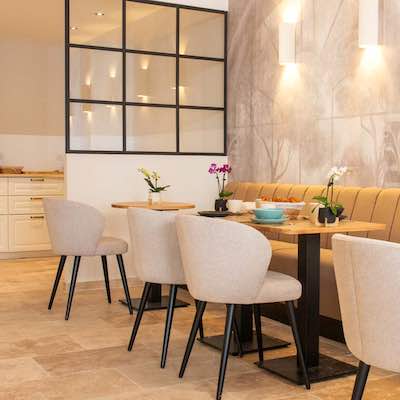


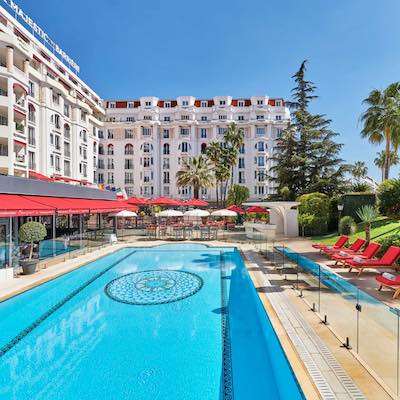
If you’re staying overnight, my complete guide to where to stay in Cannes compares these areas in detail and includes specific hotel and apartment recommendations.
How to Get to Cannes
The easiest way to get to Cannes from Nice is by train, with frequent direct connections taking around 30–40 minutes. You can also travel by bus, which is generally slower, or drive if you prefer more flexibility when exploring the French Riviera. A ferry is another option during the season, offering a scenic alternative to travelling along the coast by road or rail.

By train: The TER train is usually the most convenient way to travel from Nice to Cannes. Direct services run regularly between Nice-Ville and Cannes, and the station is within walking distance of the city centre, the Croisette and the Old Town.
By bus: Buses connect Nice and Cannes, but the journey generally takes longer than the train and can be affected by traffic. This can be a budget-friendly alternative if you’re not in a hurry.
By ferry: During the operating season, a ferry between Nice and Cannes offers a scenic way to travel along the coast. Services are less frequent than trains, and journey times are longer, so check the schedule before planning your trip around this option.
By car: Driving gives you flexibility if you want to combine Cannes with other destinations along the French Riviera. However, traffic can be heavy, particularly in summer and during major events, and parking in central Cannes can be expensive or difficult to find.
Discover Cars is my preferred car rental booking site in the French Riviera. It represents the most popular agencies and features a large selection of cars to choose from. Booking is effortless, and you can opt for free cancellation and deferred payment.
My detailed guide on how to get from Nice to Cannes includes a comparison of transport options, prices, journey times, and parking tips.
Getting around Cannes
Walking is the easiest way to get around for most visitors.
Le Suquet, the Vieux Port, Marché Forville, La Croisette, Rue d’Antibes and the train station are all within walking distance of one another. The main exception is if you want to explore further out toward Pointe Croisette, La Bocca or the Croix-des-Gardes.
Local buses are useful for longer distances, while trains are the obvious choice for excursions to Antibes, Nice and other coastal towns.
You can also use the Petit Train if you’d like an easy overview of the city without doing all the walking yourself.
Day trips from Cannes
Cannes also works well as a base for exploring more of the French Riviera. Now, I wouldn’t try to cram three or four destinations into the same day. Cannes itself deserves time, and day trip combinations work best when you choose one additional destination rather than turning the day into a race around the Côte d’Azur.
I’ll eventually put together a dedicated guide to the best day trips from Cannes. For now, these are the destinations I’d consider first.
Antibes
Antibes is the easiest coastal combination. The two cities are connected by the same TER rail line, so you can pair Cannes’ beaches and Croisette with Antibes’ historic center, ramparts and Cap d’Antibes without needing a car.
If you’re combining Cannes with Antibes, my Antibes day trip guide gives you a detailed itinerary and practical tips for exploring the town.
Saint-Paul de Vence
Saint-Paul-de-Vence pairs well if you want to add an inland medieval village and art to a Cannes stay. Because public transport connections are less straightforward than the train to Antibes, I’d consider this combination by car.
My Saint-Paul de Vence half-day trip guide will help you plan the perfect visit to this scenic hilltop village.
Grasse
Grasse is another useful combination, especially if you’re interested in perfume. You can reach the perfume capital by direct TER train from Cannes or by car.
When to visit Cannes
Cannes is a year-round destination, but each season offers a noticeably different experience.
Spring: A lively time to visit, even more so in May when the Cannes Film Festival brings the city to life. The weather is usually pleasant for sightseeing and beach walks, although accommodation prices and visitor numbers rise around major events.
Summer: Best for beach life, swimming, beach clubs, and Cannes’ lively atmosphere, but also the busiest and most expensive period. July and August bring the highest visitor numbers, while the Cannes Lions festival in June can also make the city incredibly busy.
Early autumn: September is one of my favorite times to visit Cannes, combining warm weather and sea temperatures with somewhat lighter crowds than the height of summer. October can still be pleasant for sightseeing, although the weather becomes less predictable.
Winter: Cannes is considerably quieter outside the main season, making it a good time for sightseeing without the summer crowds. Some seasonal beach clubs and other businesses close, but the city itself remains lively enough for restaurants, shopping, and exploring.
Practical Tips for Visiting Cannes
A little advance planning can make your Cannes visit easier, especially if you’re traveling during the busiest months or around major events. Here are a few practical things worth knowing before you go:
FAQ about Visiting Cannes
Plan Your Trip to Cannes
Cannes may be famous for red carpets and palace hotels, but that’s only one part of the city. Spend some time in Le Suquet, wander through Marché Forville, walk the Croisette, choose your beach carefully, and, if you have the time, take the ferry to one of the Lérins Islands. And don’t feel that you need to spend a fortune to enjoy Cannes: some of my favorite experiences here are simply walking, eating in the backstreets, and finding a quiet stretch of sand.
Bookmark this page or pin it for future reference.