If you’re looking for an Antibes travel guide that goes beyond a quick list of attractions, you’re in the right place.
Antibes has a little bit of everything that makes the French Riviera so appealing: a substantial historic Old Town, sandy beaches, a major yacht harbor, a renowned art museum, and the rugged coastline of Cap d’Antibes. And then there’s Juan-les-Pins, which adds a completely different, livelier resort atmosphere just a short distance away.
I’ve visited Antibes many times, both on day trips from Nice and during longer stays, and I greatly appreciate how much variety you can fit into a relatively compact destination. You can spend the morning wandering through Vieil Antibes, have lunch in the Old Town, walk along the ramparts, and still have time for the beach or a coastal walk.
This Antibes travel guide brings it all together: what is actually worth your time, how long you need, where to eat and stay, which beaches to choose, how to get here, and which nearby destinations make sense as day trips from Antibes.
So, are you ready to discover Antibes? Let’s go!
This Antibes travel guide features the best things to do, from Vieil Antibes and the Picasso Museum to sandy beaches and the Cap d’Antibes coastal path, plus where to eat, where to stay, how to get here, and how to plan your time.
Affiliate links are sprinkled throughout the site content. Clicking on such a hyperlink and making a booking on the platform it refers to may result in a commission for Nice & Beyond at no additional cost to you. For more information, visit the Disclaimer page or read how I choose what to recommend.
Antibes at a Glance
Short on time? Here’s what matters most:
🎨 Best for
Historic Old Town streets, sandy beaches, the Picasso Museum, coastal scenery, and a more intimate French Riviera atmosphere
🚫 Not ideal for
Travelers looking primarily for big-city nightlife, extensive shopping, or a destination that can be explored entirely by car
🗓 Time needed
One day for the main sights; two days if you want to add the Cap d’Antibes, more beach time, or a slower pace
☀️ Best time to visit
Late spring and September for a good balance of weather and crowds; summer for swimming and beach life
🚆 Car needed?
No, central Antibes is very walkable, and public transport makes it easy to explore the surrounding coast
Is Antibes worth visiting?
Yes, especially if you enjoy beaches, historic towns, good food, art, and coastal walks.
Antibes offers something surprisingly difficult to find elsewhere on the French Riviera: a substantial historic Old Town combined with genuine sandy beaches. Cannes may be more glamorous, and Nice may offer more museums and urban variety, but Antibes has a character of its own.
Vieil Antibes is compact and atmospheric, with narrow streets, lively squares and a delightful Provençal market. Beyond the old walls, the Cap d’Antibes offers a much greener and wilder landscape, while Juan-les-Pins brings sandy beaches, beach clubs and summer nightlife.
That variety makes Antibes especially versatile. Families can combine the Old Town with shallow sandy beaches, culture lovers have the Picasso Museum, and couples can mix a coastal walk with a long lunch or a quiet cove.
If you’re planning a French Riviera itinerary, Antibes also makes an easy day trip from Nice or Cannes, while still having enough to offer if you decide to stay overnight.
How much time do you need in Antibes?
A half day is enough for a quick look at the essentials: Vieil Antibes, Marché Provençal, the Picasso Museum and part of the ramparts.
With a full day, you can explore the historic center at a comfortable pace and still fit in beach time, the Cap d’Antibes coastal path, or other highlights such as Fort Carré. If you prefer a slower day, you can simply focus on Vieil Antibes and the waterfront.
I’d allow two days if you want to explore both Antibes and Cap d’Antibes without having to choose between the coastal walk, beach time, and the historic center, or if you want to enjoy the destination at a more relaxed pace.
If you’re coming from Nice for one day, my Nice to Antibes day trip guide gives you a realistic itinerary, including a half-day option.
Best things to do in Antibes
Antibes is compact enough that many of its main sights can be explored on foot. My guide to the best things to do in Antibes offers a more detailed look at the city’s attractions, including additional museums, viewpoints, and things to see beyond the highlights below.
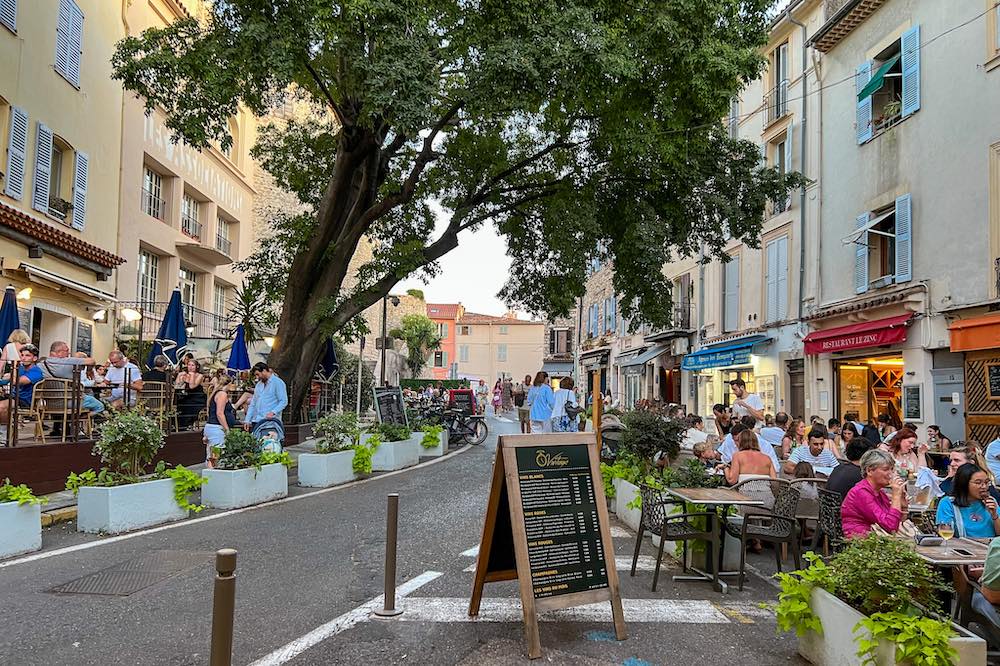
These are the experiences I’d prioritize:
1. Explore Vieil Antibes
Start in the atmospheric heart of the city, where narrow cobbled streets, small squares, colorful façades, and hidden passages fill the area inside the old fortifications.
Enter through the monumental Porte Marine and simply wander. The Safranier neighborhood is absolutely charming, while small landmarks such as the Chapelle Saint-Bernardin, Notre-Dame de la Platea, the Postcard Museum (Musée de la Carte Postale), and the Peynet Museum add historical and cultural interest along the way.
How I love the convivial buzz of Vieil Antibes! There’s an unmistakable energy as soon as you enter the old town through the Marine Gate, yet you only have to turn into one of the smaller streets to find quieter corners.
2. Browse Marché Provençal
Marché Provençal is one of Antibes’ most recognizable sights and a natural stop while exploring the Old Town.
Inside the covered market hall, local producers sell fruit and vegetables, herbs, cheeses, olives, honey, charcuterie, and other Provençal specialties. It’s a good place to pick up something for a picnic or simply soak up the lively atmosphere.
The market operates daily during the main summer season and is closed on Mondays during much of the rest of the year.
3. Visit the Picasso Museum
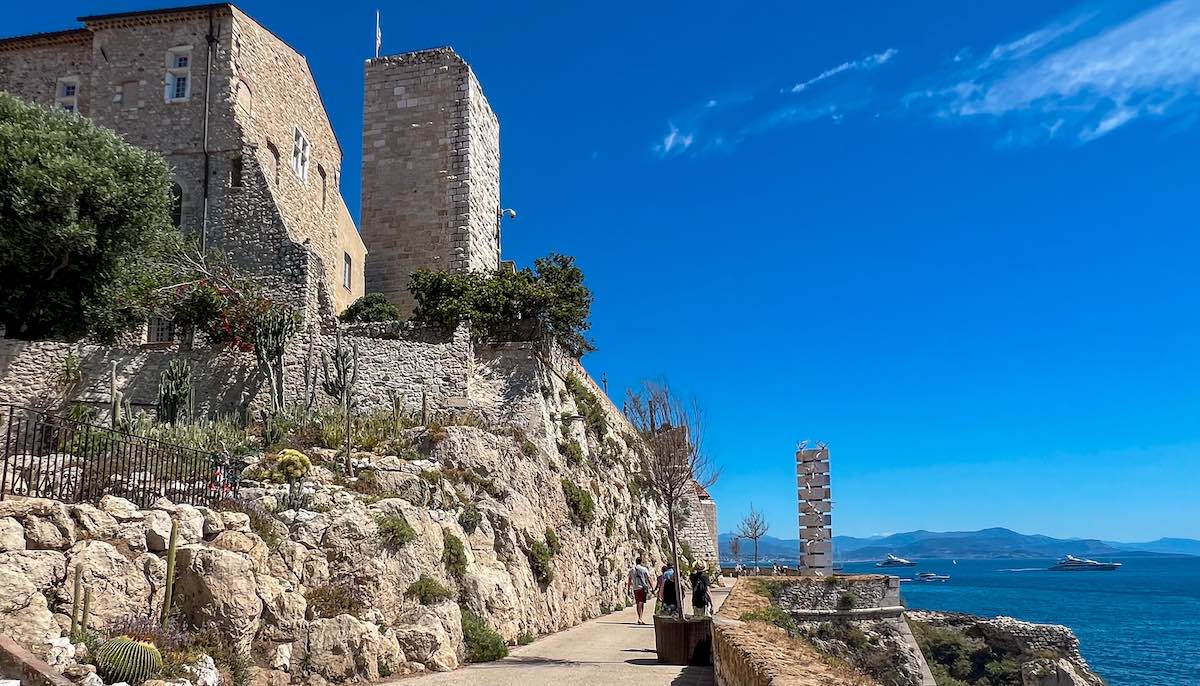
Housed in the former Château Grimaldi, the Picasso Museum is one of Antibes’ cultural highlights. Picasso lived and worked here for several months in 1946, and the museum now displays works from that period alongside pieces by other artists.
For me, the terrace is one of the highlights. Sculptures by artists including Joan Miró are displayed against sweeping Mediterranean views, making the setting almost as memorable as the collection itself.
4. Walk the ramparts and see Port Vauban
The old defensive walls provide one of the best ways to appreciate Antibes’ position between the historic center and the Mediterranean.
Follow the ramparts toward Port Vauban, one of the largest yachting harbors in Europe, and look out for Le Nomade, the monumental sculpture overlooking the harbor. If you have more time, continue toward Fort Carré for another perspective on Antibes and the surrounding coastline.
5. Walk the Cap d’Antibes Coastal Path
For a completely different side of Antibes, head to the Cap d’Antibes.
The coastal path around the southern tip of the peninsula is approximately 5 km long and takes around 2 to 2.5 hours, depending on your pace. The terrain is not that steep, but rocky sections, uneven steps, and exposed stretches make proper walking shoes essential.
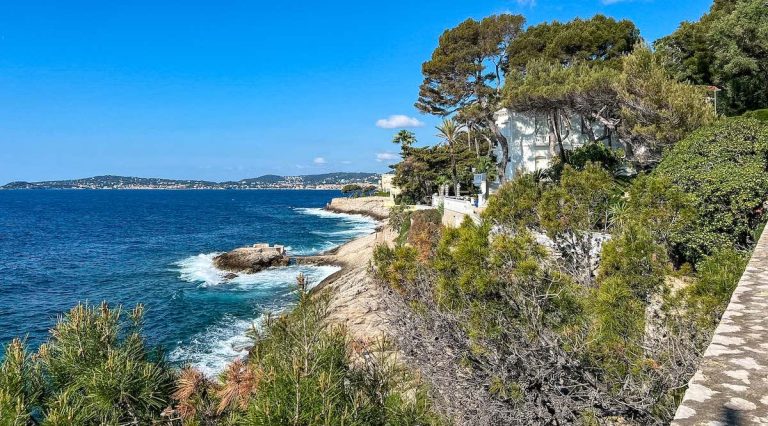
I’ve walked this trail several times and in several seasons, and it’s interesting how much its character changes throughout the year. It’s one of the most rugged coastal walks I’ve done on the French Riviera, with dramatic sea views, rocky shoreline, and stretches that feel surprisingly wild.
You can also combine the walk with Villa Eilenroc and its gardens, the Garoupe plateau, lighthouse and chapel, depending on how much time you have.
6. Experience Juan-les-Pins
Just west of Antibes’ historic center, Juan-les-Pins has an entirely different atmosphere.
Palm-lined streets, sandy beaches, beach clubs, cafés and cocktail bars give it a distinctly summery, resort-style feel. It’s also home to Jazz à Juan, one of the French Riviera’s best-known jazz festivals, held in the Parc de la Pinède.
Juan-les-Pins is worth seeing even if you’re primarily interested in historic Antibes. It shows just how varied this part of the Riviera can be within a very small area.
Best beaches in Antibes
Antibes’ sandy beaches are one of its biggest advantages over many other French Riviera destinations.
For more details on the individual beaches, beach clubs, facilities, and which stretches suit different types of visitors, read my guide to the best beaches in Antibes.
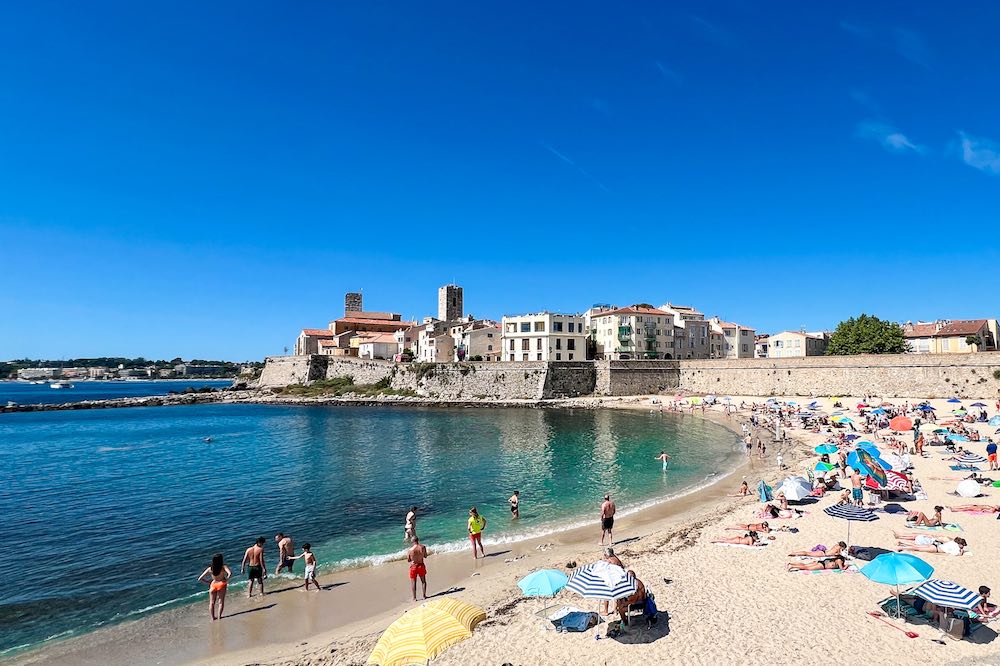
The central beaches around Antibes are convenient if you want to combine sightseeing with a swim, while Juan-les-Pins offers a longer sandy coastline and a more classic resort atmosphere. Around Cap d’Antibes, the coastline becomes more rugged, with smaller rocky coves that feel more secluded.
Beach clubs are concentrated mainly around Juan-les-Pins and Cap d’Antibes, offering a different experience from the public beaches.
Good to know: Redevelopment works at La Garoupe resumed in September 2026, but the public beach remains open, with the works scheduled to finish by the end of 2026.
Where to Eat in Antibes
Antibes has a very good mix of relaxed neighborhood restaurants, Provençal cooking and more refined dining. I like that you can easily move from a casual meal in the Old Town to a special-occasion dinner without leaving the historic center.
If you’re looking for a more gastronomic experience, Le Figuier de Saint-Esprit is the obvious standout among my recommendations. The Michelin-starred restaurant has a beautiful stone patio shaded by a fig tree and makes a memorable choice for a special meal.
For something more casual, Le P’tit Cageot is one of my favorites. Its cozy setting and comforting food make it exactly the kind of relaxed address I enjoy finding in the Old Town.
I’ve also had an excellent dinner at Nananère, tucked underneath an apartment building on Place des Martyrs de la Résistance. It’s a small address that feels very different from the more obvious waterfront restaurants.
For an evening drink with plenty of atmosphere, Absinthe Bar is another address worth knowing. Its vaulted cellar and unusual setting give it a character that goes well beyond a standard cocktail bar.
And if you want the most casual option of all, Marché Provençal is perfect for picking up local specialties and putting together your own picnic.
Where to Stay in Antibes
Where you stay can change the feel of an Antibes trip. I’ve stayed in the Old Town & City Center so far, and it’s especially convenient if you want the historic sights, restaurants, and beaches within easy walking distance.
These are the three main areas I’d consider:
Old Town & City Center puts you closest to the historic streets, Marché Provençal, Picasso Museum, restaurants, and several sandy beaches. It’s the most convenient choice for first-time visitors and for anyone who doesn’t want a car.
Cap d’Antibes is better suited to travelers looking for scenery, privacy, and a quieter atmosphere. The peninsula is more spread out, so local transport or a car can be useful. Many hotels and beach establishments are seasonal and may close during the winter.
Juan-les-Pins is the liveliest option, even more so in summer. It’s a good choice for beach lovers, nightlife, and travelers looking for a wider range of accommodation, often at more accessible prices than the Cap d’Antibes.
And here’s a selection of top picks:






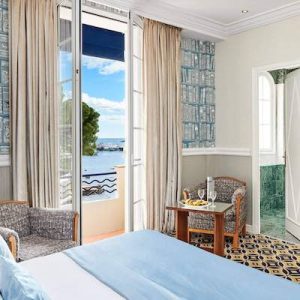

For specific hotel and apartment recommendations, see my complete guide to where to stay in Antibes.
How to Get to Antibes
The easiest way to get to Antibes from Nice is by train, with a direct journey of around 20–25 minutes. You can also take the bus, cycle along the coast, or drive if you prefer more flexibility. For most visitors, the train is the simplest option, especially for a day trip.

By train: The TER train is the fastest and most convenient way to travel from Nice to Antibes. Direct services run regularly, and the station is within walking distance of the Old Town, making this an easy option for exploring the main sights without a car.
By bus: The bus is an alternative if you prefer to travel by road or want a different way to reach Antibes. The journey generally takes longer than the train, so it’s worth comparing the options before you set off.
By bike: Cycling from Nice to Antibes offers a scenic way to follow the coast and explore at your own pace. It’s best suited to confident riders who are comfortable cycling on roads shared with traffic.
By car: Driving gives you more flexibility if you want to explore Cap d’Antibes or combine your visit with nearby destinations. However, parking can be challenging around the Old Town, particularly during the busy summer months.
Discover Cars is my preferred car rental booking site in the French Riviera. It represents the most popular agencies and features a large selection of cars to choose from. Booking is effortless, and you can opt for free cancellation and deferred payment.
For detailed routes, journey times, fares, and practical advice, see my guide on how to get from Nice to Antibes.
Getting around Antibes
Walking is the easiest way to get around for most visitors.
Vieil Antibes, the ramparts, Marché Provençal, Port Vauban, the Picasso Museum and the central beaches are all within easy walking distance of one another.
The main exception is the Cap d’Antibes. Its attractions are spread across the peninsula, so local buses, cycling or a car can be useful depending on your plans.
Juan-les-Pins is also accessible on foot from central Antibes, although the walk takes longer.
Day trips from Antibes
Antibes also works well as a base for exploring more of the French Riviera. I wouldn’t try to cram three or four destinations into the same day, though. Antibes itself deserves time, and day-trip combinations work best when you choose one additional destination rather than turning the day into a race around the Côte d’Azur.
There are plenty more options if you have extra time, but these are the combinations I’d consider first.
Nice
Nice makes an interesting contrast to Antibes. While Antibes is compact and historic, Nice offers a much broader mix of museums, neighborhoods, markets, cafés and urban seaside life.
If you’re planning to visit both, see my Nice day trip guide for ideas on what to prioritize.
Saint-Paul de Vence
Saint-Paul de Vence makes an excellent day-trip combination if you want to swap the Mediterranean coast for a hilltop medieval village. Its stone lanes, art galleries and panoramic setting offer a very different experience from Antibes, and it’s especially appealing if you enjoy art and historic villages.
For a ready-made itinerary and practical tips, see my Saint-Paul de Vence half-day trip guide.
Cannes
Cannes is an easy coastal combination if you want to compare two very different seaside towns. Cannes offers the polished Croisette, sandy beaches and a more glamorous resort atmosphere, while Antibes has a stronger historic character.
If you want to turn the Cannes stop into a proper day trip, my Cannes day trip guide gives you a practical itinerary.
When to visit Antibes
Antibes can be enjoyed throughout the year, with a different rhythm in each season.
Spring: One of my favorite periods for exploring Antibes. The weather is usually pleasant for sightseeing and coastal walks, while the summer crowds have yet to arrive.
Summer: Best for beach life, swimming, beach clubs, and the lively atmosphere of Juan-les-Pins. It is also the busiest season.
Early autumn: Late September and October can offer an excellent combination of warm weather, sea temperatures, and somewhat lighter crowds.
Winter: Antibes remains pleasant for sightseeing and walks, especially around Old Town, but the resort areas of Juan-les-Pins and Cap d’Antibes become much quieter and some seasonal businesses close.
Practical Tips for Visiting Antibes
A few practical details are worth knowing before you visit Antibes, especially during the busiest months or if you want to explore Cap d’Antibes. Here are the practical details I’d keep in mind
FAQ about Visiting Antibes
Plan Your Trip to Antibes
Antibes may be compact, but there’s much more to the destination than its historic center. Spend some time wandering Vieil Antibes, visit the Picasso Museum, walk the ramparts, find your perfect beach, and allow time for the very different landscapes of Cap d’Antibes and Juan-les-Pins.
Bookmark this page or pin it for future reference.